September 1, 2026
Furnace Installation in Waban: A Homeowner’s Guide to Reliable Heat
 Articles
In Waban, MA 02468, a dependable furnace is not a luxury. It is what keeps a drafty breakfast nook comfortable during a January cold snap, helps pipes stay protected on single-digit nights, and gives your family steady heat after a damp, windy Nor’easter rolls through Newton. If your current heating system is aging, uneven, noisy, or costing more to run each winter, planning a professional furnace installation is one of the most practical upgrades you can make for your home.
Furnace Installation in Waban, MA is not just about swapping one metal cabinet for another. The right contractor should look at the whole home: insulation, ductwork, gas venting, thermostat location, indoor air quality, and how your family actually uses the space. A colonial near Waban Square may have different needs than a renovated home near the Charles River or a newer addition with open ceilings and large windows. The goal is simple: safe, efficient, even heat that feels good in real New England weather.
1.Why Furnace Installation in Waban, MA Requires Local Know-How
Waban homes see the full range of Massachusetts weather. Winters can bring bitter overnight lows, heavy snow, and long stretches when the furnace runs for hours at a time. Then, in summer, high humidity can affect basements, air handlers, ductwork, and indoor air quality. A heating system that is poorly matched to the home may limp through a mild week, but it will show its weaknesses during a deep freeze.
Local housing style matters, too. Many homes in Waban have been expanded or updated over the years. A family room addition, finished attic, basement office, or sunroom can change heating loads dramatically. If the furnace was installed before those improvements, it may be oversized in some areas and undersized in others. That often leads to short cycling, cold rooms, dry air, and higher fuel use.
A careful installation starts before any equipment is set in place. The contractor should review the home’s square footage, layout, insulation levels, window quality, duct design, and existing venting. They should also ask questions: Are the upstairs bedrooms too hot at night? Does the first floor feel chilly near the front entry? Does the furnace wake you up when it starts? These details help shape the right solution.
Prodigy Climate Solutions works with homeowners who want more than a quick equipment changeout. A good furnace installation considers comfort, safety, efficiency, and serviceability, so the system can perform well not just this winter, but for many heating seasons ahead.
2.Signs It May Be Time to Replace Your Furnace
Most furnaces do not fail all at once. They usually give warning signs. The challenge is knowing when a repair still makes sense and when replacement is the more reliable long-term choice. If your furnace needs frequent service, struggles to reach the thermostat setting, or runs louder than it used to, it is worth having the system evaluated before the coldest part of the season.
Rising energy use without better comfort
One common red flag is a heating bill that keeps climbing while comfort gets worse. Fuel prices can change, but an older or poorly performing furnace may also waste energy through inefficient combustion, weak airflow, dirty components, or repeated short cycles. Homeowners sometimes compensate by raising the thermostat, using space heaters, or closing vents, but those fixes rarely solve the underlying problem.
Uneven temperatures throughout the home
In Waban, it is common to hear homeowners say the back bedroom is freezing while the living room feels fine. That can point to duct issues, insulation gaps, airflow restrictions, or an improperly sized furnace. A new furnace alone may not fix every comfort issue, but the installation process is the right time to identify and correct the causes.
Age, safety concerns, and repair history
If your furnace is older, has a cracked heat exchanger concern, produces unusual odors, or causes carbon monoxide alarms to activate, treat the situation seriously. Safety always comes first. Even when a repair is possible, repeated part failures can make replacement the more sensible option. A professional can explain the condition of the unit, not pressure you, and help you compare the risk of ongoing repairs against the benefits of new equipment.
3.Choosing the Right Furnace for a Waban Home
The best furnace is not automatically the biggest or the most expensive. It is the one that matches your home, duct system, efficiency goals, fuel availability, and comfort expectations. A properly selected system runs long enough to distribute heat evenly, but not so long that it struggles to keep up during extreme weather.
Sizing matters more than many homeowners realize
Oversized furnaces can heat a space quickly, but that is not always a benefit. When a furnace is too large, it may turn on and off repeatedly. This short cycling can create temperature swings, increase wear on components, and reduce efficiency. Undersized furnaces, on the other hand, may run constantly and still leave the house cold on the coldest nights.
A professional load calculation is the right starting point. This is not the same as guessing based on the old furnace size. If the home has new windows, added insulation, air sealing, or expanded living space, the old system may no longer be the correct reference.
Efficiency and comfort features
Modern furnaces can offer improved efficiency, quieter operation, and better airflow control compared with older units. Some systems are designed to adjust output more gradually, which can help reduce blasts of hot air followed by cool periods. Paired with the right thermostat, zoning approach, or indoor air quality accessories, a new furnace can make the home feel more balanced.
Fuel type also matters. Many Waban homes use natural gas, while others may have different existing setups. Venting requirements, combustion air, condensate drainage, and electrical needs must all be handled correctly. This is why furnace installation should be done by licensed, experienced professionals rather than treated as a simple appliance delivery.
4.What to Expect During a Professional Furnace Installation
A smooth installation depends on preparation. Before installation day, your HVAC contractor should confirm the system selection, review access to the equipment area, discuss thermostat needs, and identify any duct, venting, gas, or electrical work required. If the furnace is in a basement or utility room, the work area should be cleared enough for safe removal and installation.
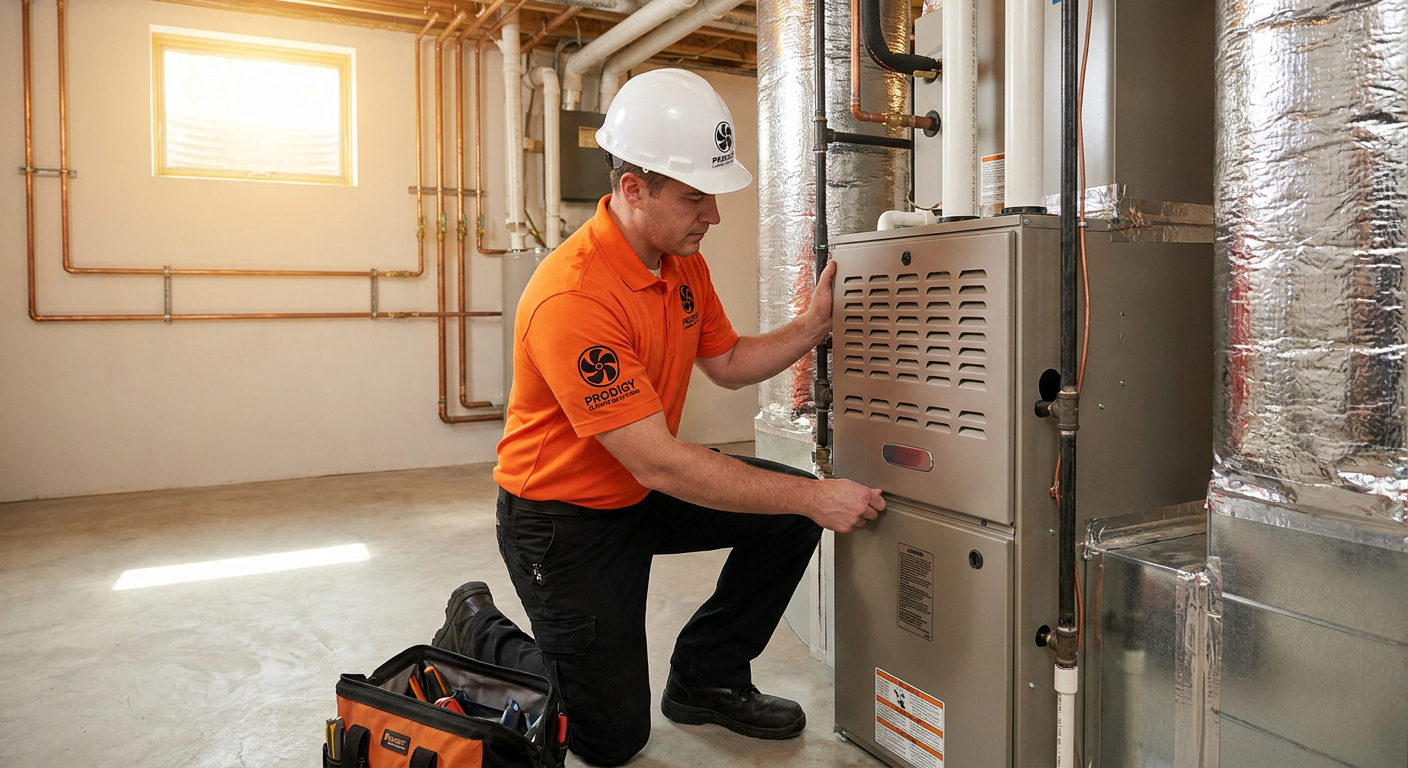
On installation day, the old furnace is disconnected and removed carefully. The new unit is positioned, connected to the duct system, tied into fuel and electrical service, and vented according to code and manufacturer requirements. Installers should also address condensate drainage when applicable and verify that all safety controls are operating correctly.
Commissioning is where quality shows
The job is not complete just because warm air comes out of the registers. Commissioning is the process of testing and adjusting the system so it operates safely and efficiently. This may include checking gas pressure, temperature rise, airflow, venting performance, electrical connections, thermostat communication, and safety shutoffs.
A quality installer will also walk you through the basics. You should know how to change the filter, what thermostat settings are recommended, what sounds are normal, and when to schedule maintenance. Prodigy Climate Solutions emphasizes this homeowner education because a well-installed furnace also needs proper care to keep performing.
For many homes, installation can be completed with minimal disruption, but every property is different. Older basements, tight mechanical rooms, masonry chimneys, or duct modifications may require additional planning. A clear conversation before work begins helps avoid surprises.
5.Ductwork, Airflow, and Indoor Comfort After Installation
A new furnace can only perform as well as the air distribution system allows. If ducts are undersized, leaky, poorly insulated, or restricted by old dampers and filters, the home may still have comfort problems. This is especially relevant in Waban homes with older ductwork that was designed for a different layout or heating standard.
Airflow affects more than temperature. It influences noise, filter performance, humidity balance, and equipment life. Weak return air can cause the furnace to work harder. Leaky supply ducts can waste heated air in basements or wall cavities. Rooms far from the furnace may never receive enough conditioned air, while nearby rooms may get too much.
During the installation planning process, ask whether your ductwork should be evaluated. In some cases, simple improvements such as sealing accessible duct joints, improving return pathways, replacing restrictive grilles, or correcting a poorly placed filter rack can make a noticeable difference. In other homes, larger duct changes may be recommended, especially if there have been additions or chronic comfort complaints.
Indoor air quality should also be part of the discussion. New England homes are often closed tightly in winter, which can trap dust, pet dander, cooking odors, and dry air. The right filtration strategy can protect the furnace and improve comfort, but filters must be matched to the blower’s ability to move air. Higher filtration is not helpful if it starves the system of airflow.
6.How to Protect Your New Furnace for the Long Term
Once your new furnace is installed, a few habits can help protect your investment. Replace or clean filters on the schedule recommended for your system and household. Homes with pets, active fireplaces, renovation dust, or frequent fan use may need filter attention more often than expected.
Keep the area around the furnace clear. Storage boxes, paint cans, laundry items, and seasonal decorations can block access or create safety concerns. If your furnace uses intake and exhaust piping, make sure outdoor terminations remain clear of snow, leaves, and debris. After a heavy storm, it is worth taking a quick look outside.
Schedule annual maintenance before the heating season whenever possible. A fall tune-up gives a technician time to inspect burners, ignition, safety controls, blower components, venting, electrical connections, and overall performance before the first hard cold snap. Maintenance also gives you a chance to ask questions if a room feels different or your thermostat habits have changed.
Finally, pay attention to changes. New noises, frequent cycling, weak airflow, unusual smells, or thermostat errors should not be ignored. Catching a small issue early can prevent a no-heat emergency on a holiday weekend. With professional installation and routine care, a modern furnace can deliver consistent comfort through many Massachusetts winters.
Frequently Asked Questions
How do I know what size furnace my Waban home needs?
The right furnace size should be based on a professional load calculation, not simply the size of the old unit. In Waban, older homes, additions, insulation upgrades, and window replacements can all change the heating requirement. A proper assessment helps prevent short cycling, cold rooms, and unnecessary energy waste.
Can a new furnace fix uneven heating in my house?
Sometimes, but it depends on the cause. If uneven heating is related to an aging or improperly sized furnace, replacement can help. If the issue comes from duct leaks, poor return air, insulation gaps, or closed-off rooms, those conditions should be addressed as part of the installation plan.
Should I replace my furnace before it completely fails?
In many cases, yes. Planning ahead gives you more time to choose the right system, schedule installation, and avoid emergency decisions during extreme cold. If your furnace is older, unreliable, noisy, or needing repeated repairs, a proactive replacement can reduce stress.
What should I ask an HVAC contractor before furnace installation?
Ask whether they will perform a load calculation, evaluate ductwork, review venting and safety requirements, and commission the furnace after installation. You should also ask how they handle permits, thermostat setup, filter guidance, and cleanup. Clear answers are a good sign that the contractor is focused on the whole system, not just the equipment.
How often should a newly installed furnace be maintained?
Most furnaces should be professionally maintained once a year, ideally before the heating season. Annual service helps confirm safe operation, clean key components, and catch developing issues early. Homeowners should also keep up with filter changes between maintenance visits.
Furnace Installation in Waban, MA is a decision that affects daily comfort, energy use, safety, and peace of mind. Whether you are replacing an aging unit in a classic Newton home or planning heat for a newly renovated space, the best results come from careful sizing, skilled installation, and honest guidance.
If you are ready to discuss a new furnace for your Waban home, contact Prodigy Climate Solutions for professional help tailored to local homes and New England weather. Call (857) 316-8944 today to schedule furnace installation guidance in Waban.
When You Choose Prodigy, You Choose Comfort
Available 24/7 for homeowners across Massachusetts.