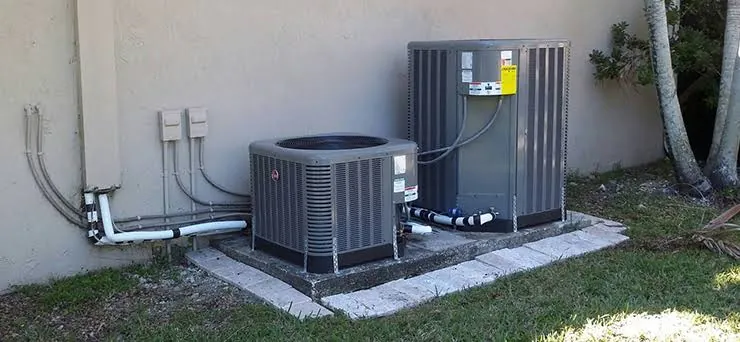
A good installation starts before equipment is ordered. In Burlington, two homes on the same street can need very different designs because one may be a 1950s ranch with low attic access while the next is a renovated Colonial with a large family room addition. Prodigy begins by looking at the building envelope, window exposure, room usage, existing duct condition and where indoor and outdoor equipment can be placed without creating service problems later. If your home has ductwork, we check whether it can support modern airflow for central AC or a ducted heat pump. Leaky, undersized or poorly balanced ducts can make even quality equipment feel disappointing. If the home has no ducts, ductless cooling and heating can be designed around bedrooms, main living zones, finished basements or hard-to-condition rooms over garages. Outdoor unit placement is also local work. We consider snow clearance, roof drip lines, property lines, walkway access, sound, landscaping and visibility from outdoor living areas. Before installation, we review permit needs, electrical requirements and the best routing for line sets and drains so the finished system looks intentional rather than added as an afterthought.
Cold-climate heat pumps are not the same as older cooling-only systems. Properly selected units are designed to continue producing heat in low outdoor temperatures, which makes them useful for Burlington’s long shoulder seasons and much of the winter. The key is design. Prodigy reviews heat loss, room-by-room comfort complaints, insulation levels and the homeowner’s expectations before recommending a system. Some Burlington households want a heat pump to become the primary comfort system. Others want it to reduce the use of older heating systems while adding high-efficiency air conditioning. Either approach requires honest planning. We discuss balance points, thermostat settings, backup strategy when applicable and how a variable-speed system should feel in daily use. The best heat pump installations run longer at lower output, reducing temperature swings and helping with air mixing. We also plan for winter maintenance realities such as snow accumulation around outdoor equipment and keeping airflow clear after storms. For homes in windy spots near open corridors or elevated lots, placement and stands matter. A quiet, accessible, cold-weather-ready installation protects performance when Burlington weather is least forgiving.
Burlington homeowners often compare comfort options with friends and family in Reading and North Reading, but the right choice depends on the individual home. Central AC is a strong fit when existing ducts are in good condition, sized correctly and routed to the spaces that need cooling. It can provide a familiar whole-home feel with one or more thermostats, improved filtration and better humidity control when properly matched. Ductless cooling is often better for homes without ducts, additions, sunrooms, finished basements, top-floor bedrooms and spaces where adding ductwork would be invasive. Many Burlington projects benefit from a blended design: central air or a ducted heat pump for the main house, plus one or two ductless zones for problem areas. Prodigy helps homeowners compare these paths without assuming one is automatically better. We review where indoor heads or registers would go, how condensate will drain, whether the electrical panel has capacity, and how outdoor equipment can be grouped neatly. We also consider everyday living: noise in bedrooms, furniture placement, room doors that stay closed and how often each area is occupied. The result is cooling that fits the house instead of fighting it.
HVAC installation in Burlington is not just equipment and labor. It also involves local permitting, utility coordination and documentation that protects the homeowner. Prodigy helps plan around Town of Burlington requirements for mechanical work and any related electrical updates, including disconnects, new circuits or panel considerations. Burlington homes are commonly served by Eversource for electric service and National Grid for natural gas, and many homeowners also ask about Mass Save pathways. Program rules, eligible equipment and paperwork can change, so we help you understand what information may be needed without inventing rebate amounts or guaranteeing approvals. Installation details also matter for long-term reliability. Refrigerant lines should be supported and protected, wall penetrations sealed, outdoor units set level, condensate drains routed correctly and ducts modified cleanly when central equipment is installed. In tight basements, attic spaces or closets, service access must be preserved so future maintenance does not become a problem. We also review thermostat locations, filter access and homeowner operation before we leave. These practical steps are what separate a durable local installation from a rushed equipment swap.
We serve every corner of Burlington, MA — including Fox Hill, Havenville, Winnmere, Pine Glen, Burlington Town Common, Burlington Mall area, Wayside Commons, Mill Pond Reservoir, Vine Brook and Cambridge Street/Route 3A corridor — and surrounding ZIP 01803.
Fox HillHavenvilleWinnmerePine GlenBurlington Town CommonBurlington Mall areaWayside CommonsMill Pond ReservoirVine BrookCambridge Street/Route 3A corridor