Air Duct Cleaning & Sealing
Prodigy Service

Air Duct Cleaning & Sealing

Cleaner air, and ducts that actually deliver it.

Air duct cleaning helps when there is a real reason for it — renovation dust, rodent or mold evidence, or visible debris in the trunk lines. Just as often the bigger win is sealing leaky ducts so the air you paid to cool reaches the room instead of the attic. We inspect first and tell you which one your home needs.

Air duct cleaning is worth doing when there is a reason for it, and a waste of money when there is not. We inspect with a camera, show you what is actually in your ducts, and recommend cleaning, sealing, filtration, or nothing at all — whichever the evidence supports.

Inspection

We photograph the inside of your ducts so you can see the condition rather than take our word for it.

Cleaning

Full source-removal cleaning of supply and return runs, registers and the blower compartment.

Sealing & Insulation

Leaky joints and uninsulated attic runs waste cooling and pull dust into the system — sealing fixes both.

When duct cleaning genuinely helps

Four situations justify it clearly: construction or renovation dust pulled into the return system, evidence of rodents or insects in the ductwork, visible mold growth on duct surfaces or in the air handler, and heavy debris in trunk lines of a house that has never had them touched. In those cases source-removal cleaning — sealed negative-pressure vacuum plus agitation of each run — makes a real difference to what you breathe.
When sealing beats cleaning

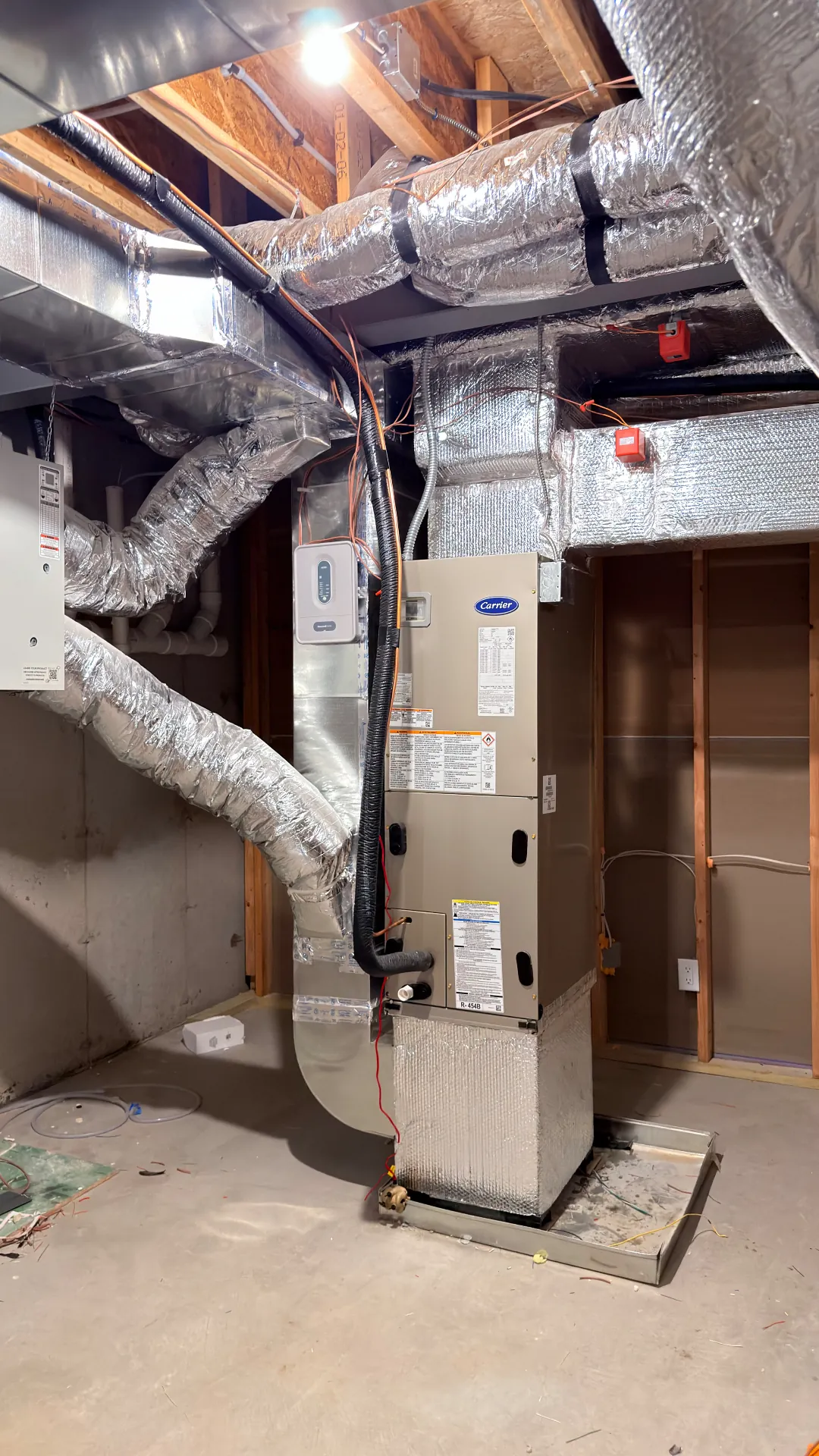
In many Massachusetts homes the ducts are not dirty so much as leaky. Attic and crawlspace runs joined with tape that gave up two decades ago can lose a large share of conditioned air before it reaches a room, while pulling dusty, humid attic air back into the return side. Sealing those joints with mastic and insulating the runs improves comfort in the room that never cools, lowers run time, and reduces the dust load in the first place. It is usually the better dollar.

Filtration that cleans air without choking the system

Jumping to the highest MERV filter you can buy is a common mistake — a restrictive filter in a system designed for low static pressure starves airflow, freezes coils and shortens blower life. The right answer is usually a deeper four- or five-inch media cabinet at a moderate MERV, which filters far better while dropping less pressure than a one-inch high-MERV panel. We size filtration to your measured static pressure.

Indoor air quality in older housing stock

Metro Boston homes are full of finished basements, converted attics and additions on their own duct runs, each with different humidity and pressure behavior. Humidity control, correct return sizing and balanced pressure typically fix perceived air quality problems that homeowners assume are dirty ducts. We measure before we sell anything.

What this typically costs in Massachusetts

Real ranges from work we do in Metro Boston and MetroWest — not a teaser price. Your written, itemized quote comes after we see the house.

Quoted upfront
Camera duct inspection

Photographed findings you can see before deciding on any work.

By system size
Source-removal cleaning

Priced on number of runs and system configuration, quoted in writing.

By scope
Duct sealing

Mastic sealing of accessible joints, plus insulation on attic and crawlspace runs.

By equipment
Media filter cabinet

Includes static pressure verification after installation.

See which Mass Save® rebates apply to you

Air Duct Cleaning & Sealing questions we hear most

How often should air ducts be cleaned?+

There is no fixed schedule that applies to every home. Clean when there is a cause — renovation dust, pests, mold, or visible debris. A well-sealed system with correct filtration in a home with no pets may never need it. Anyone selling you a calendar-based duct cleaning subscription is selling, not diagnosing.

Will duct cleaning help my allergies?+

Sometimes, when the ducts are genuinely contaminated. More often, better filtration and humidity control deliver the larger improvement. We will tell you which of the three your home actually needs rather than defaulting to the most expensive one.

Do you use the sealed vacuum method?+

Yes. Source removal with a sealed negative-pressure vacuum and mechanical agitation of each run is the only method worth paying for. Blowing debris around with compressed air and no containment moves the problem into your living space.

How do I know if my ducts are leaking?+

Common signs are one room that never reaches temperature, dust that reappears days after cleaning, and higher-than-expected run times. We confirm with inspection and pressure measurements instead of guessing.

Do you clean dryer vents too?+

We focus on HVAC ductwork. If we see a clearly obstructed dryer vent during an inspection we will point it out, because it is a fire risk worth handling.

Where we do this work

Town-by-town detail on housing stock, electrical capacity and local incentive programs.

CallGet Estimate