HVAC Maintenance
Prodigy Service

HVAC Maintenance

Two visits a year. Far fewer emergencies.

Most no-cool and no-heat calls we take were preventable. A real HVAC maintenance visit measures the numbers that predict failure — capacitor microfarads, static pressure, refrigerant charge, amp draw — so we can replace a drifting part on a calm Tuesday instead of during a heat advisory.

A New England HVAC system runs hard in both directions: humid 90-degree stretches in July and single-digit mornings in January. Preventive HVAC maintenance is what keeps a system reaching year fifteen instead of failing in year nine — and it is the cheapest hour you will spend on your equipment all year.

Cooling Tune-Up

Coil cleaning, condensate clearing, charge verification and electrical testing before the first heat wave.

Heating Tune-Up

Combustion safety, airflow, ignition and control checks so winter starts without a surprise.

Comfort Plan

Both visits bundled, with priority dispatch and member pricing on any repair we perform.

What a real tune-up includes

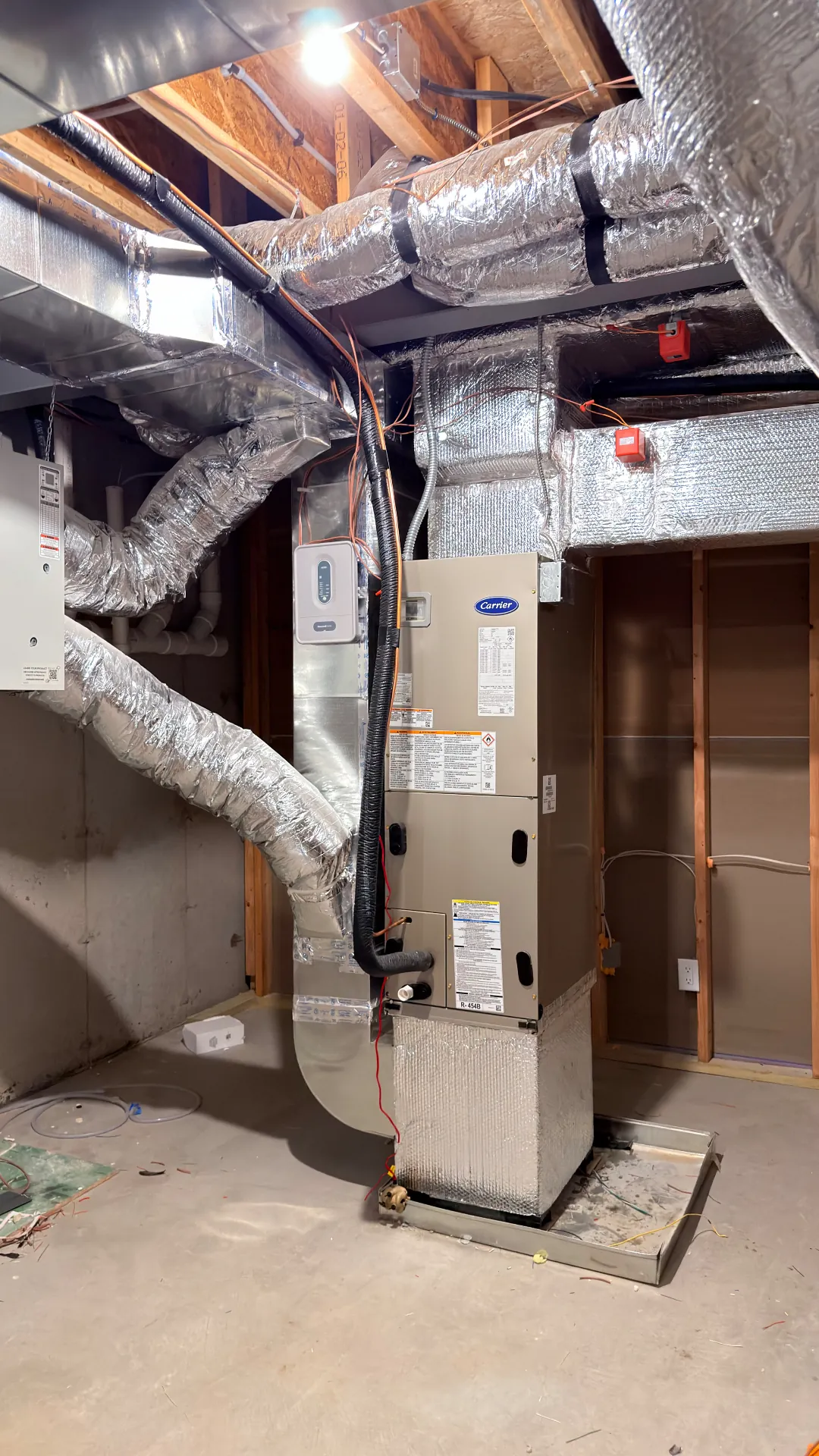
A hose-down and a sticker is not maintenance. We measure superheat and subcooling to verify the refrigerant charge, read static pressure across the coil to catch airflow restrictions before they cook a compressor, test every capacitor against its rated microfarads, check amp draw at the compressor and blower, torque electrical connections that loosen with thermal cycling, clean the outdoor coil, and clear and treat the condensate path. You get a written report with the actual numbers, not a page of vague checkmarks.
Why maintenance prevents most emergency calls

Parts rarely fail without warning — they drift. A capacitor rated at 45 microfarads that now reads 38 still runs the system, but it will not survive the first 95-degree afternoon. A condensate line half full of biofilm will trip the float switch the week you leave on vacation. Because those conditions are measurable months in advance, catching them on a scheduled visit converts a weekend emergency AC repair into a fifteen-minute planned part swap at normal rates.

Maintenance and your warranty

Nearly every manufacturer requires documented annual professional maintenance to keep parts coverage valid. Homeowners often discover this only when a compressor fails in year seven and the claim is denied. Our visit reports are dated, itemized and warranty-acceptable, so the paperwork exists when you need it.

How often, and when

Two visits a year for a system that both heats and cools: cooling in spring before the first heat wave, heating in early fall. Heat pumps benefit most from the two-visit schedule because they run year-round. Book the cooling visit in April or May — by late June the whole region is calling at once, and scheduling gets tight for everyone.

What this typically costs in Massachusetts

Real ranges from work we do in Metro Boston and MetroWest — not a teaser price. Your written, itemized quote comes after we see the house.

Quoted upfront
Single tune-up

Flat rate stated when you book, for one system.

Membership
Comfort Plan (2 visits/year)

Both seasonal visits, priority dispatch and member pricing on repairs.

Reduced rate
Additional systems

Second and third systems at the same address are discounted.

See which Mass Save® rebates apply to you

HVAC Maintenance questions we hear most

Is HVAC maintenance actually worth it?+

Yes, for two measurable reasons: it catches drifting components before they strand you, and it keeps the system operating at its designed efficiency, which shows up on summer electric bills. It also preserves manufacturer parts coverage, which most warranties condition on documented annual service.

How often should I change my filter?+

Every one to three months depending on filter depth, pets and occupancy. A one-inch filter in a house with two dogs is a monthly item. A four-inch media filter often goes six months. A clogged filter is the single most common cause of frozen coils we see.

Do you maintain systems you did not install?+

Yes. We maintain every major residential brand regardless of who installed it, and we will tell you honestly if we find installation defects worth correcting.

What is the difference between a tune-up and a repair visit?+

A tune-up is scheduled, measured and preventive. A repair visit diagnoses a specific failure. If a tune-up uncovers a failed part, we quote the repair separately and in writing before doing it.

Can maintenance lower my energy bills?+

It restores the efficiency you already paid for. A dirty coil, low charge or restricted airflow can add a meaningful percentage to run time. Maintenance will not make a fifteen-year-old system perform like a new inverter unit, and we will not claim it does.

Where we do this work

Town-by-town detail on housing stock, electrical capacity and local incentive programs.

CallGet Estimate