Your family breathes indoor air more than any other. We test, filter, and purify so allergens, dust, and pollutants stay out — with solutions that integrate seamlessly into your HVAC system.
Massachusetts homes spend much of the year sealed shut — humid and moldy in August, bone-dry and dusty in February. Indoor air quality work is the least glamorous part of HVAC and often the part homeowners notice most, because it changes how the house feels every day.
Kill bacteria, viruses, and mold with medical-grade UV and PCO technology.
Upgraded filters that catch what standard filters miss — without restricting airflow.
Balanced humidity means better comfort, healthier skin, and protected woodwork.
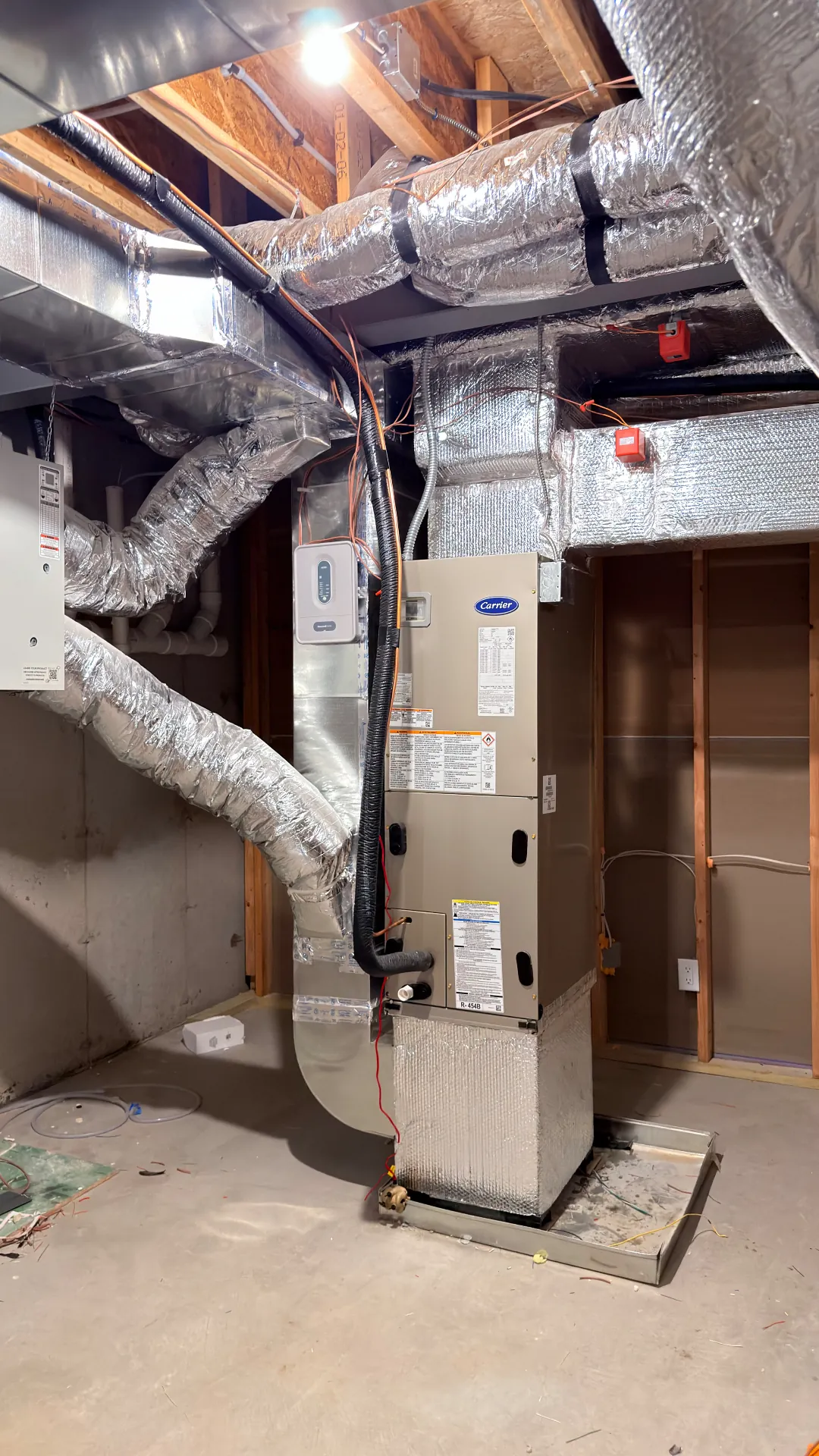
A higher MERV filter catches more, but it also resists more airflow, and most residential systems were never designed for a thick MERV 13 in a one-inch slot. Choke the return and you get reduced capacity, frozen coils in summer, overheated heat exchangers in winter, and a system that costs more to run. The right fix is usually a properly sized four- or five-inch media cabinet, which delivers high filtration at low pressure drop and only needs changing once or twice a year. We measure static pressure before recommending a filter, rather than selling the highest number on the shelf.
Air sealing and insulation — the same weatherization Mass Save® subsidizes — make homes efficient and also make them airtight enough that stale air, cooking odors, CO2 and moisture stay put. The answer isn't leaving a window open; it's controlled ventilation. An ERV or HRV brings in measured fresh air while recovering most of the heat (and, with an ERV, moderating humidity), typically running continuously at low volume. In homes we've weatherized or where anyone complains of stuffiness and morning headaches, this is often the highest-value upgrade on the list.
Summer humidity in Massachusetts basements and first floors is a comfort and mold problem, and it's often made worse by an oversized AC that cools too quickly to dehumidify. Fixes range from correcting system sizing and fan speed to adding a dedicated dehumidifier ducted into the system. Winter is the opposite: heated air can drop below 25% relative humidity, causing dry skin and sinuses, static, and gaps in hardwood and trim. A whole-home humidifier tied to the system holds 35–45%, which protects millwork and feels warmer at the same thermostat setting.
Leaky ducts in an unconditioned attic or basement pull in dust, fiberglass and humidity, and dump conditioned air where nobody lives. Sealing joints and boots and insulating runs in unconditioned space delivers measurable comfort and efficiency gains. Duct cleaning, by contrast, is oversold: it's worthwhile after renovation dust, a rodent problem, or visible contamination, and mostly cosmetic otherwise. We'll tell you which situation you're in, and we don't run duct-cleaning specials designed to get a technician into your house.
Real filtration and real ventilation do most of the work. Beyond that, UV lamps mounted at the coil have legitimate value in keeping the coil and drain pan biologically clean — which matters for airflow and odors — while claims about whole-house disinfection are usually overstated. We're cautious about ozone-generating and some PCO devices, which can produce byproducts you don't want in your air. If someone in the home has asthma or serious allergies, the reliable sequence is: seal ducts, upgrade to proper low-pressure-drop filtration, add controlled ventilation, then control humidity.